
New Year's Resolutions are Garbage
The sad fact is that by the end of January and the beginning of February, most people will fall off the wagon. Read to break the cycle.
Why New Year's Resolutions Fail
The Status Quo
The sad fact is that by the end of January and the beginning of February, most people will fall off the wagon. Most people will revert to late nights, rushed mornings, procrastination, poor eating, and little to no physical activity. They will fall back into this almost unconsciously, not understanding why things transpired as they did, and be overcome with guilt, frustration, or both only to throw their hands up in the air and continue with business as usual.
While there is no singular answer to why this happens, my experience has taught me there are at least some very clear reasons as to why.
The Trap
In such moments of frustration, we often jump to judgments about the situation. For example, if someone we know broke their fast or quit the gym, a part of us might think of them as "weak" or having no "willpower".
And if you don't think that about others, you probably think it about yourself. This may look like when you beat yourself up for not making it to the gym on time, eating the extra cookie, or having that extra beer. You feel ashamed, get angry, and the cycle starts over again.
This faulty perception is the first reason why you frequently fail to follow through with New Year's resolutions.
The time is never perfect
I'm writing about this because I've been there.
I knew in December that I wanted to set out to look and feel completely different by next year and that I would start in December so the habits were built by January and I could power through into the summer.

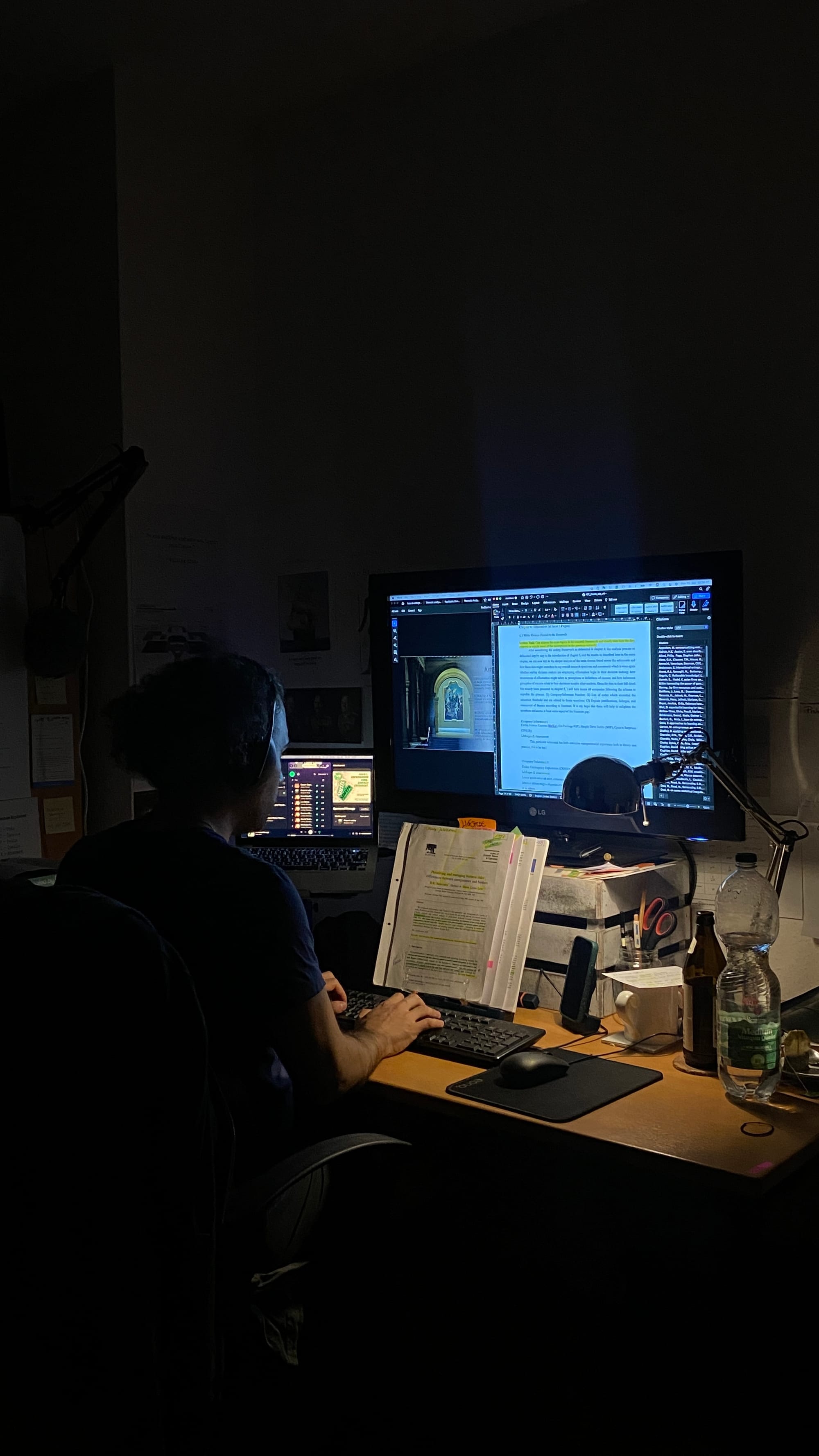

While that worked for most of December, the stress revved up in January as I had to look for a replacement tenant in my apartment and move into my new one. Then the first week of February my lady got sick and I came tumbling after all of last week. All the while having to prepare for the launch of The CCT Method.
So as you can see, the time was never "the right" time.
When it wasn't a broken arm (last year), my thesis (September), or sickness (last week) - it was never "the right time" to go to the gym, eat better, sleep better, and start a business (let alone two)!
So the second reason why New Year's resolutions fail is because you are constantly living in a non-existent state of the future. A state of "Things will be right when...XYZ."
I built the CCT Website, packages, and podcast over one year, tacking away at it patiently just about every day before grad school, after work, and every moment in between I could find.
"Well done is better than well said." - Benjamin Franklin
No metrics, no progress
The third reason many people fail to stay on track with their resolutions is that they are accountable only to themselves. Period. Full stop.
The fact of the matter is that most people lack the discipline to follow through because deep down we are all struggling with various demons. Old perceptions and beliefs about what we do and don't deserve; many of which are passed onto us through our parents and traumatic experiences.
I am speaking directly about this because I am no exception to this. While I'm very happy with what I've accomplished thus far, many of these things were only possible because I looked outside of myself.
I strive to be authentic and honest with myself about the limits of my self-discipline and frequently talk about the things that I am working on. Not to brag, but to hold myself accountable. Good friends will listen to your enthusiasm when you share your goals and build you up. They will also inquire about how those plans are going because they understand that goal attainment is an essential part of long-term fulfillment.
How to cut the non-sense and make the change
- Whether it's through a journal, therapy, or coaching, you will want to increase your self-knowledge and self-awareness. Procrastination, guilt, and frustration are symptoms, not the disease. Seek information or help in exploring the trajectory of your behavior from goal setting -> excitement -> start -> failure -> disappointment and everything in between. Behavior is not born in a vacuum. There is a reason you are the way you are. Your only job is to find that out.
- Things like "weakness" and "willpower" are unhelpful matters of judgment and perception. Newsflash - neuroscientists and psychologists are still torn about the nature of consciousness itself let alone whether there is "free will" and willpower for that matter. For this and several other reasons, I strongly caution against using perceptions of power and weakness as metrics. What neuroscience and psychology have found is that things like self-regulatory behavior and delayed gratification are real and can be worked on with practice, just as a healthy body can be achieved with proper eating and physical activity.
- Start today. Whether it's by eating one less cookie or walking the long way home, start today with one incredibly small but measurable item and make tiny adjustments every day. Try to become as aware as possible of your emotions over the day without judgment. Journaling at the end of the day can be a great tool for this. Use friends and family (or clubs and colleagues) to hold yourself accountable for showing up as you say you will.
If you're tired of Falling of The Wagon February and want to learn more about how to hack yourself into long-term results for the new year, join my community below and begin taking action toward your goals TODAY!
I'm grateful to be able to say that I've already helped several people get unstuck from patterns and perceptions of the past. You can see for yourself here.